
Project background
Authorable Workflow, a low code tool for creating deterministic, business-logic-driven user flows, offers omnichannel deployment across internal agent tools, help surfaces, and chat experiences. While proven effective and saving millions in operational revenue.
Since its inception in 2018, AWF has demonstrated exceptional potential, achieving a remarkable 10x growth. However, to fully capitalize on this momentum, we must address critical challenges, including partner adoption, target audience alignment, and adapting to evolving business needs.
My team oversees the UX quality for the authorable workflow, a critical tool utilized by 24 Google products. To ensure a consistent and high-quality user experience across this broad ecosystem, I established a new UX program, leading comprehensive reviews and driving continuous improvement of published workflows.
Guided workflow on support surfaces
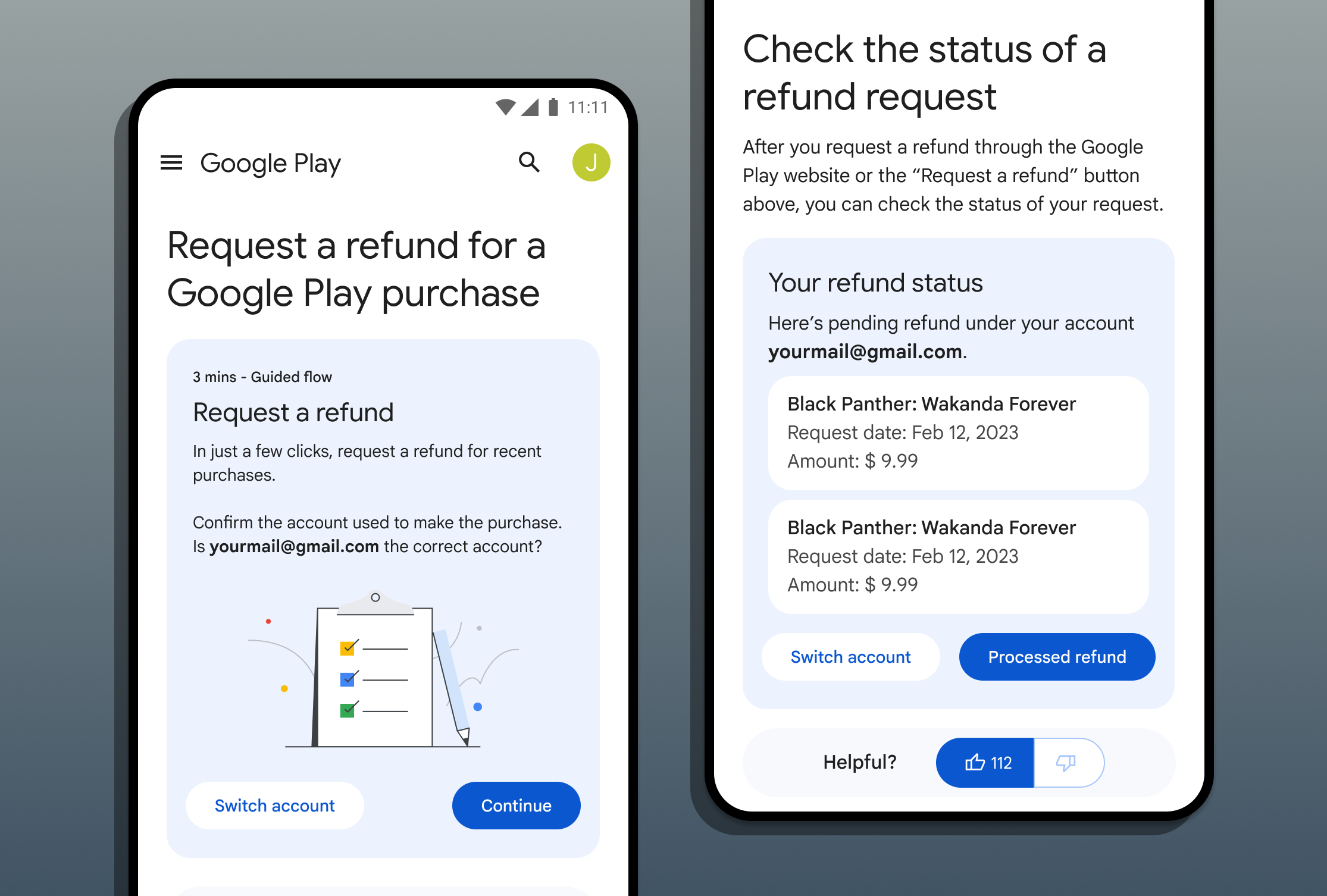
The Authorable Workflow is seamlessly integrated into support surfaces, presented as a cohesive page element. This visual example demonstrates how this embedding creates a unified and efficient user experience.
Guided workflow for agents
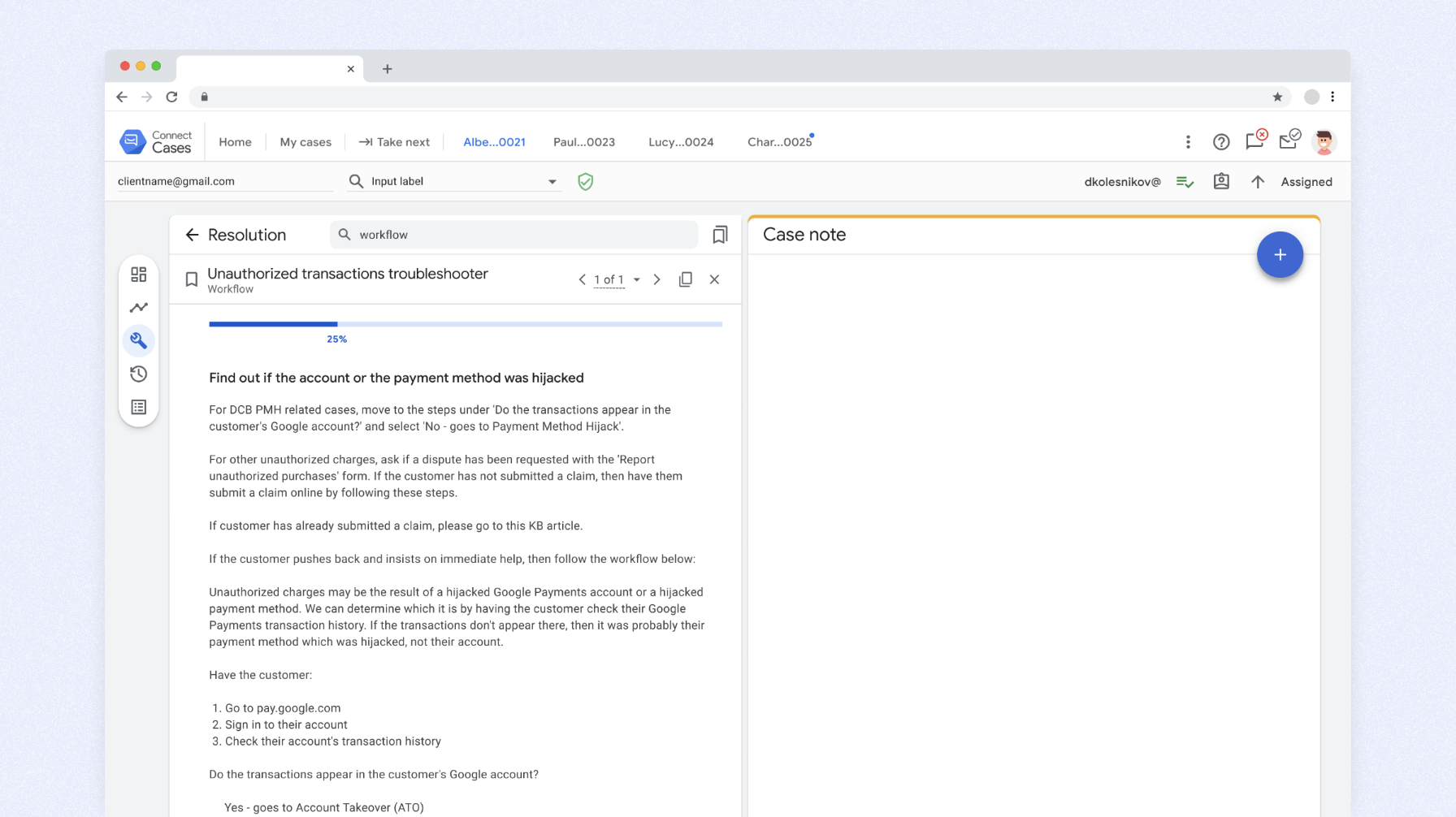
Authorable Workflow significantly enhances support agent efficiency by providing consistent guidance for troubleshooting, issue diagnosis, and user information retrieval. With 9.8k agents utilizing Workflow daily, it plays a critical role in resolving user support inquiries at scale.
Workflow in conversational experiences
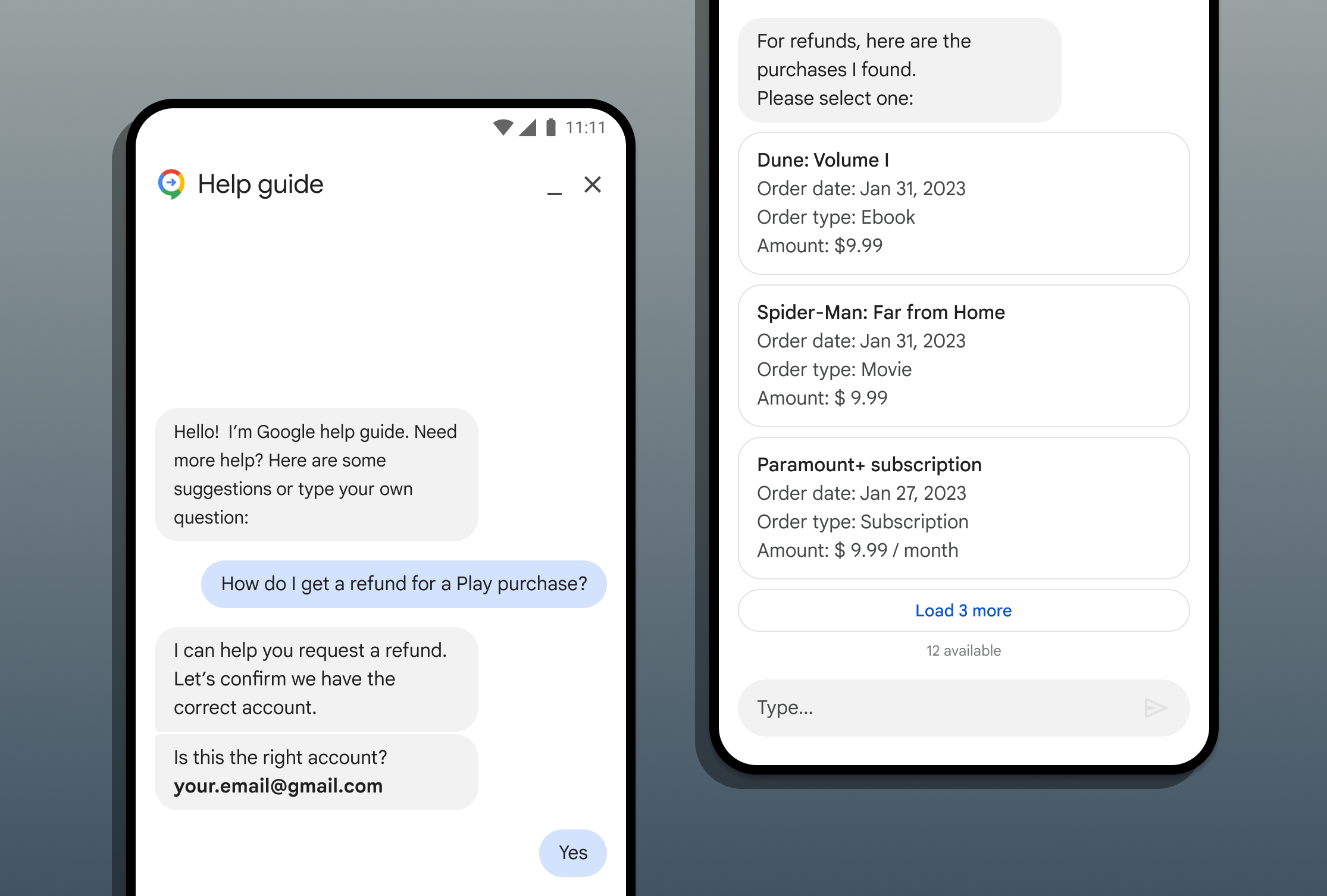
Deterministic workflows are essential for resolving policy-related customer issues. By integrating authorable workflows into chat experiences, AI agents can provide real-time, actionable assistance, enabling users to address issues directly within the conversation.
Canvas improvements
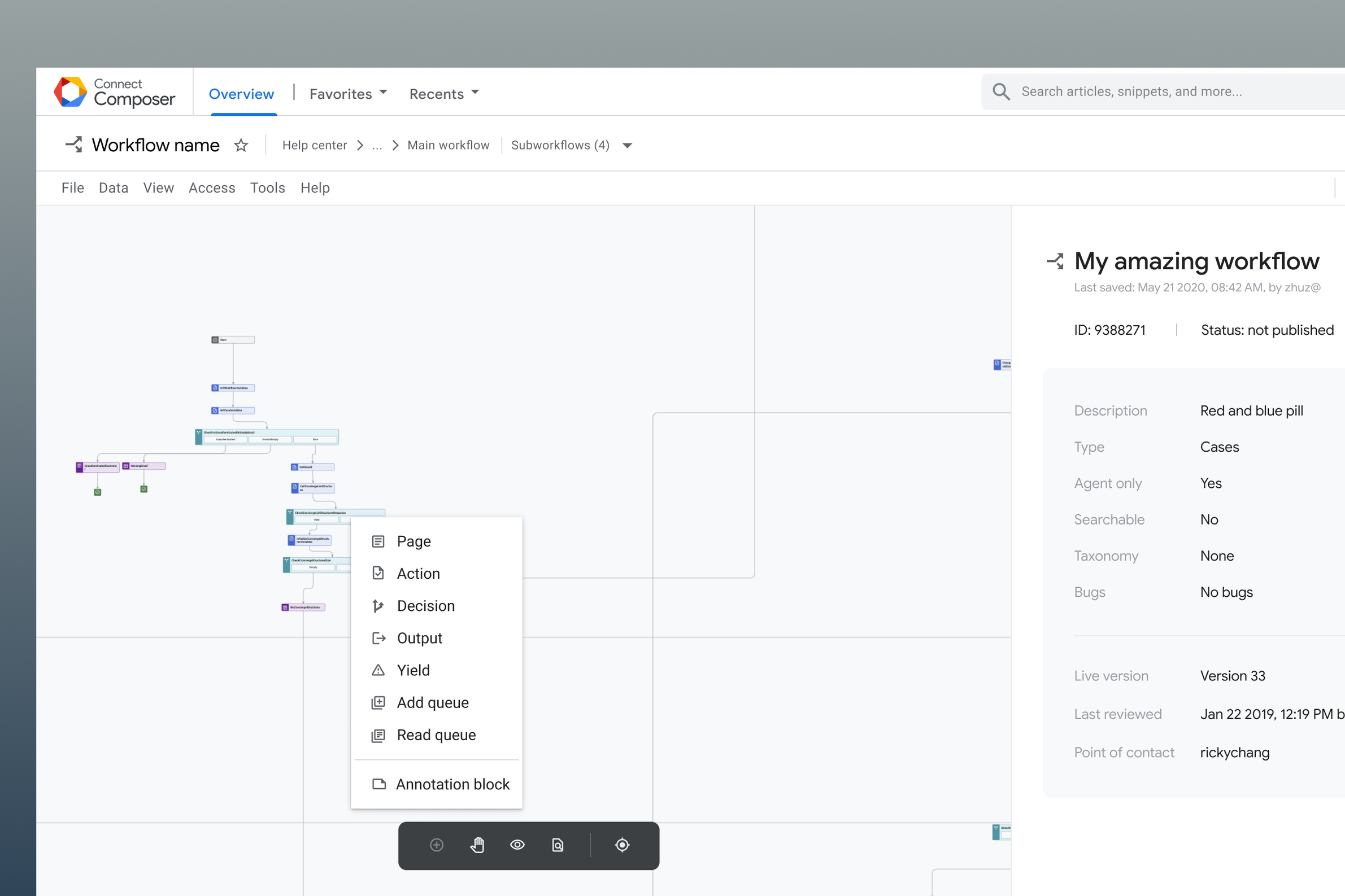
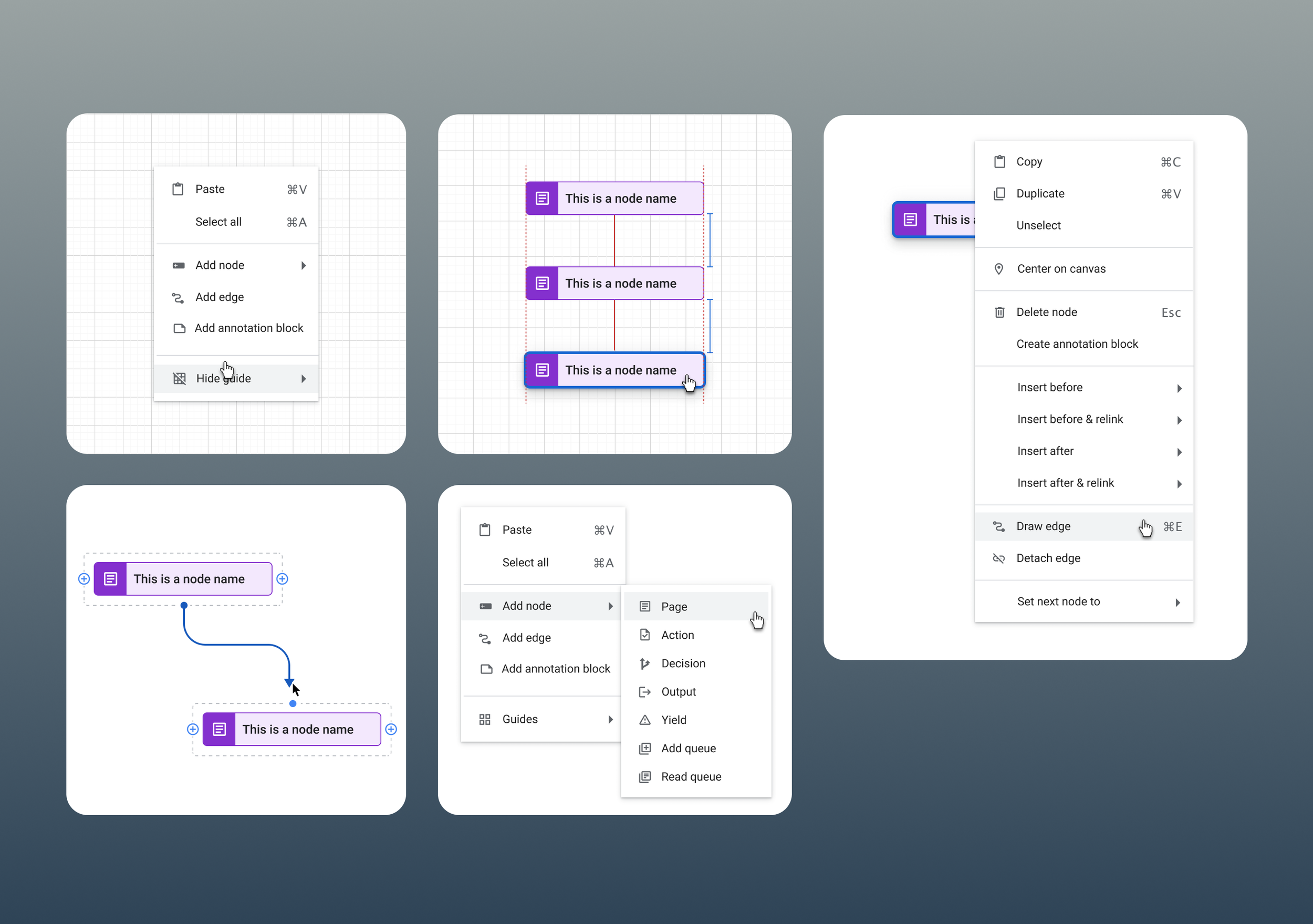
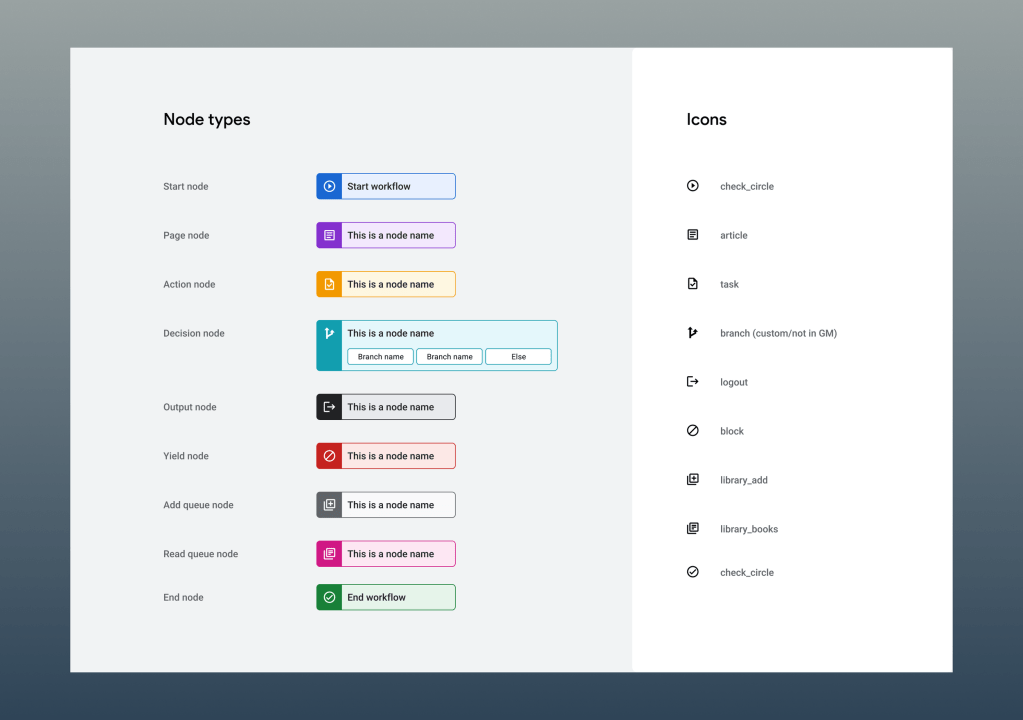
A complete canvas redesign delivered significant improvements, including clear visualization of underlying logic through redesigned nodes, enhanced canvas organization with intelligent grids, and streamlined access control via a context menu. We also optimized code editing and viewing, minimizing clicks and introducing smart suggestions for variables and constants, resulting in increased partner adoption and more complex workflow projects.
 SitezDesign